
Notes
When Implementation Is No Longer Scarce
Revision history
- Wording
Adjusted tone and wording; the views and main arguments are unchanged.
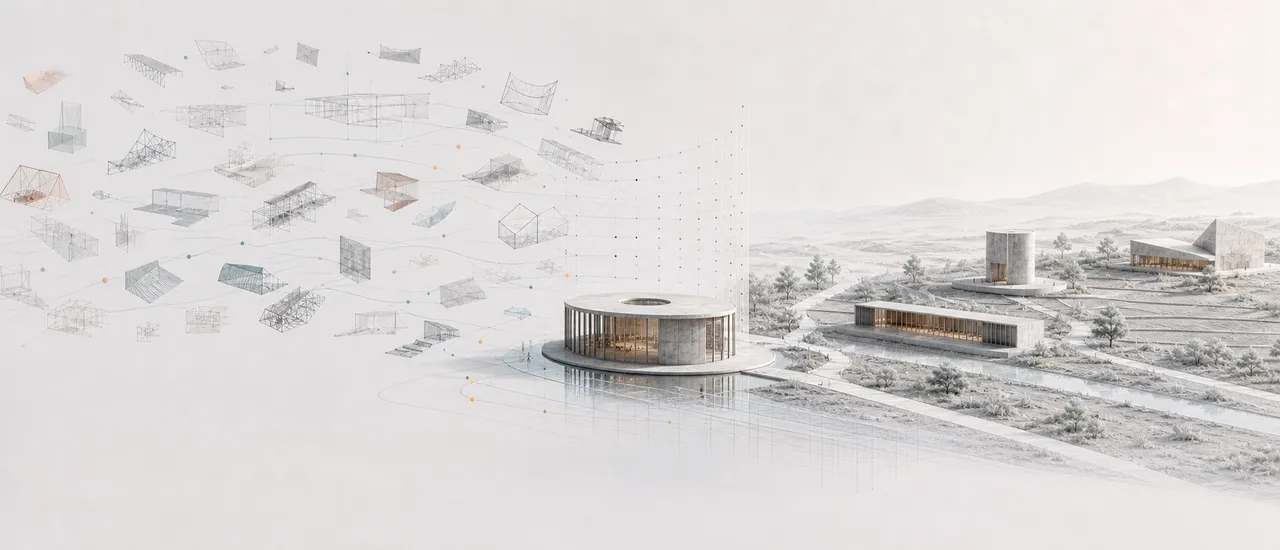
A software idea can now begin turning into a prototype while it is still being explained.
Describe the need, generate an interface, connect a model, fill in the data flow, and deploy something usable. Engineering has not disappeared, but the distance between a sentence and an initial implementation has collapsed.
Ideas did not become worthless.
AI is removing some of the scarcity that execution once lent them.
Execution Used to Protect Ideas
An idea once had to cross many barriers before entering reality.
Software needed a team. Research needed long validation. Products needed distribution and capital. Complex systems needed deployment, operations, and maintenance. Many people could imagine similar directions; few could finish them.
The advantage of an idea therefore did not always come from being hard to imagine. Expensive execution protected it.
That cost gave early movers time. Competitors could understand the direction and still need to assemble people, knowledge, and resources before repeating it.
AI compresses the path from expressed intent to an initial result. Search, prototyping, coding, content production, and some validation all get cheaper. A barrier that once created months of lead may create weeks or days.
The reduction is uneven. User relationships, proprietary data, hardware, physical organization, regulation, and trust do not appear because a model can code.
What weakens first is an advantage maintained only by “other people cannot build this yet.”
After It Exists
The AI era produces a steady class of attractive ideas: another agent, workflow, industry assistant, automation platform, or model-powered product.
Any of them may solve a real problem.
But if one sentence fully describes the idea, and anyone who hears it can use the same models and tools to reproduce the first result, the sentence is not a durable moat.
Products will not become identical. People choose different boundaries, meet different users, receive different feedback, and form different data and working habits.
The hard-to-copy part begins after implementation: sustained understanding of the problem, relationships with users, judgment formed through failure, feedback loops that keep correcting the product, and an organization willing to carry maintenance.
An idea remains the starting point. Its value comes less from being unthought and more from the relationship it later builds with reality.
What Will Starting Now Accumulate?
When execution becomes easy, the natural impulse is to build every idea immediately.
Some ideas, however, are waiting for external conditions rather than implementation.
Building too early can mean constructing elaborate compensation around today’s limitation: hierarchical knowledge bases for short context, rigid workflows for weak planning, layers of roles and prompts for unreliable validation.
Those structures may be rational and useful today. If their main job is to cover one generation of model weakness, they may become maintenance debt as soon as the model crosses the gap.
So ask at the beginning:
If I start now, what will actually accumulate?
Starting early has clear value when it accumulates users, data, trust, domain experience, and feedback that public information cannot recreate.
If it mainly accumulates patches for today’s model, starting early may mean carrying the debt early.
Build an Experiment You Can Throw Away
Waiting is not the default answer.
Many questions reveal themselves only in contact with reality. Does anyone need this? Is the problem definition sound? Which feature is essential, and which was imagined in a meeting?
Between waiting and building a permanent system lies a lighter option: an experiment designed to be discarded.
It does not need a complete architecture or a story about becoming a platform. It trades the smallest reasonable implementation for a fact that could not otherwise be obtained.
Deletion does not make the experiment waste. If it answers a question that changes a decision, it completed its job.
Do not automatically promote exploration into an asset. Experiments reduce uncertainty. Long-lived systems accept continuing responsibility. Shared code and tools do not make those purposes identical.
First Mover, First Debtor
Technology culture likes first-mover advantage. AI makes two kinds of first move worth separating.
One creates durable accumulation. Users, data, experience, and feedback remain useful after the technology changes.
The other performs work that a future model will do cheaply. Once capability improves, the elaborate structure stops producing advantage but still demands compatibility, migration, and maintenance.
Early on, they look alike. Both consume effort, produce complex systems, and improve short-term results.
The difference appears later.
Before committing, ask: If everyone can reproduce the feature tomorrow, what advantage survives from today? What fact can action obtain that waiting cannot? Which accumulation survives the next model? What evidence justifies another investment, and what signal should end it?
Judgment does not predict the future perfectly. It makes investment inspectable, systems reducible, and wrong directions escapable.
Research Is Not Exempt
AI can generate conjectures, search literature, suggest proof strategies, design experiments, check derivations, and implement verification.
A conjecture is not a theory. A proof sketch is not a proof. Neither establishes that the question deserves years of attention.
The hard questions remain: Is the object natural? Is the problem important? Does the assumption expose structure or merely make the proof work? Does a generalization improve understanding or only add machinery?
AI can participate in those judgments. The distinction is not a mystical human faculty that models can never touch.
The practical distinction is responsibility. People and institutions still bear the opportunity cost and consequences of a research program. More candidate directions do not remove the obligation to choose.
An achievement is not the first sentence. It includes definitions, proof, evidence, explanation, and enough structure for others to continue.
What Cannot Be Copied Quickly
If disclosure allows rapid reproduction, secrecy around the idea alone may offer less protection than expected.
The more durable context is why the problem matters, which attempts failed, what evidence changed the direction, and which boundaries must not be loosened for convenience.
It also includes trust, proprietary data, long feedback, and standards formed through repeated tradeoffs.
Those cannot be compressed into one prompt or copied from the final product.
The value of an idea shifts from the moment it is conceived toward the process in which it is selected, tested, corrected, and carried forward.
Making a Claim on Reality
AI will make ideas and initial implementations abundant.
Reality will not suddenly gain infinite attention, data, authority, or maintenance capacity. Every system that enters it consumes resources, creates dependencies, and produces consequences someone must own.
Expensive execution used to filter choices before we had to explain them. As that filter weakens, the hidden questions return: Which problems are real? Which deserve action now? Which experiments should exist briefly? Which structures deserve a long life? What can be built but should not keep occupying the world?
AI did not devalue ideas.
It made “I thought of it” less able to stand as an advantage by itself.
Implementation can become cheap.
Choice cannot.