
Drawing Handbook is an AI-generated interactive drawing reference. It arranges scattered fundamentals into a path from line, form, perspective, light, and color to composition, figure drawing, common media, Eastern and Western art history, and methods for reading artworks.
It can be used to browse the subject, look up terms, and practice observation through artworks, diagrams, and interactive examples. Its content and structure were generated primarily by language models and have not received systematic professional review.
Content System

- Fundamentals of form: line and shape, perspective, light and shadow, and color theory.
- Composition and design: composition rules, visual design principles, figure drawing, and movement.
- Media and genres: drawing, watercolor, oil and acrylic, and Chinese painting.
- Western art history: classical and Renaissance art, Baroque to Romanticism, Impressionism and Post-Impressionism, Modernism and contemporary art.
- Eastern art history: Chinese art history, Japanese art, and East-West exchange.
- Appreciation methods: how to read a painting, material and technique identification, and an art glossary.
Chapter Example
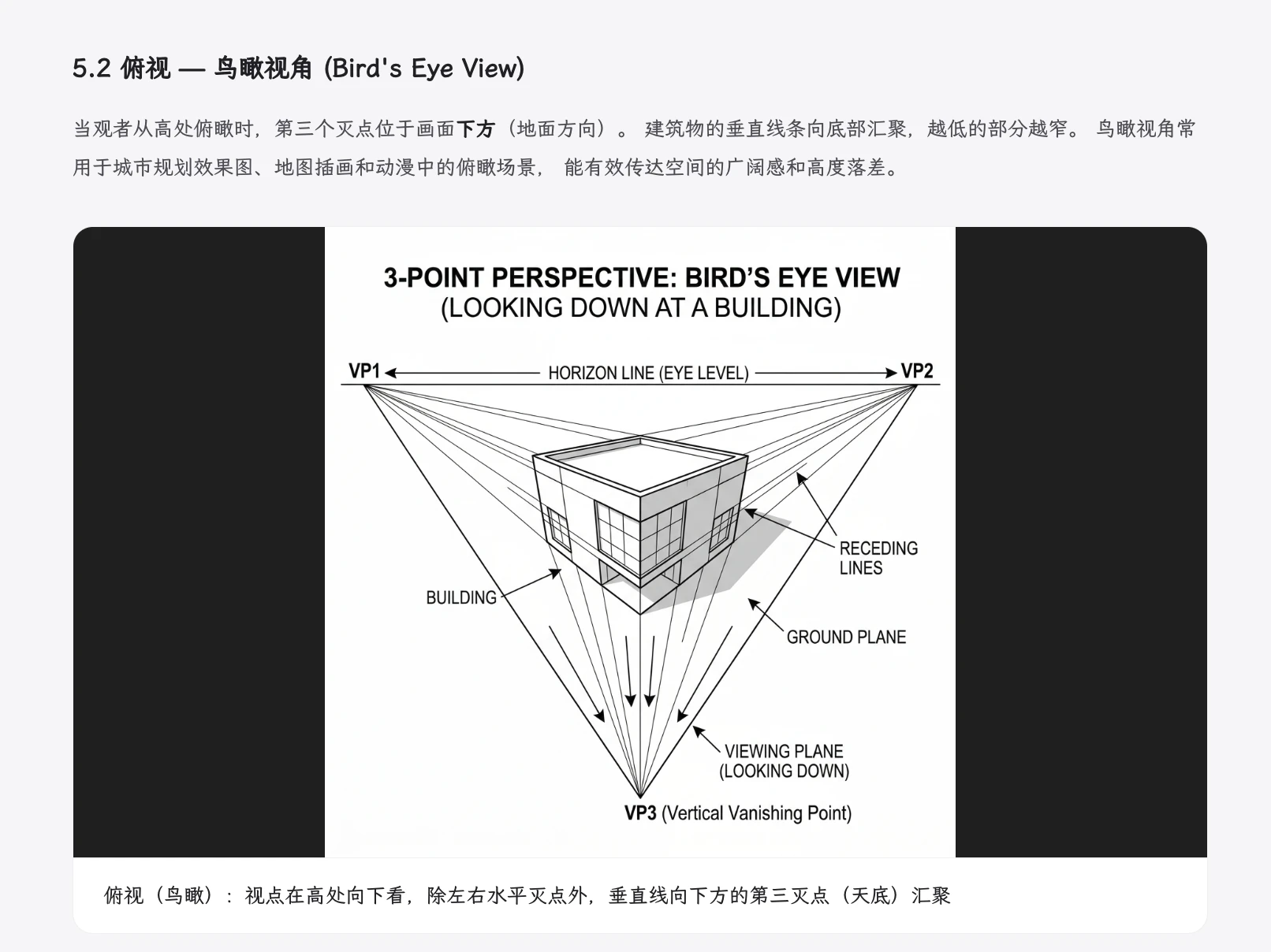
Each chapter centers on a clear question: explain the concept, show a diagram or artwork example, then connect it back to drawing practice or art-historical context. It is better treated as a reference to revisit during practice than as a one-pass course.
Interactive Content
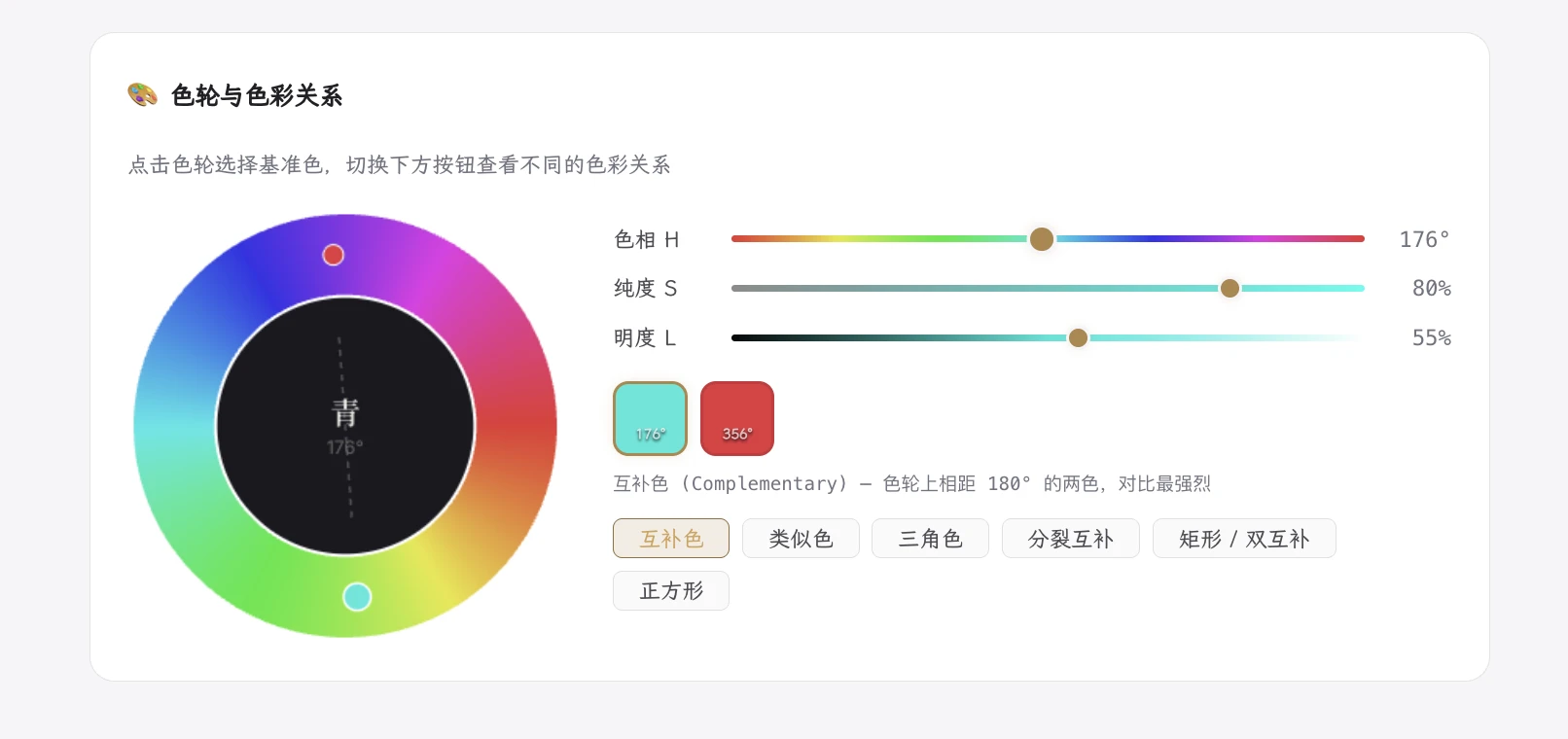
The handbook includes small interactive tools that turn abstract concepts into objects that can be dragged, switched, and compared.
- Color wheel and color relationships for exploring palette structure around a base color.
- Paint mixing simulator for observing hue, saturation, and value changes from common pigment names.
- Perspective guides for understanding horizon lines, vanishing points, and one-, two-, and three-point grids.
- Composition overlays for thirds, golden ratio, golden spiral, diagonals, triangles, and dynamic symmetry.
- Value analysis and before/after sliders for studying grayscale structure, light distribution, and visual changes.